The Serpentine Chain
A coffee table book exploring the cultural and geological connections between the mountains of Appalachia and Celtic Britain. Follow along as the book is written by Sharyn McCrumb and illustrated by Cristy Dunn.
Mountains Across the Sea
What do the mountains of Appalachia have in common with the rugged Highlands of Scotland and Ireland? More than poetry and song—they share ancient roots beneath the earth itself.
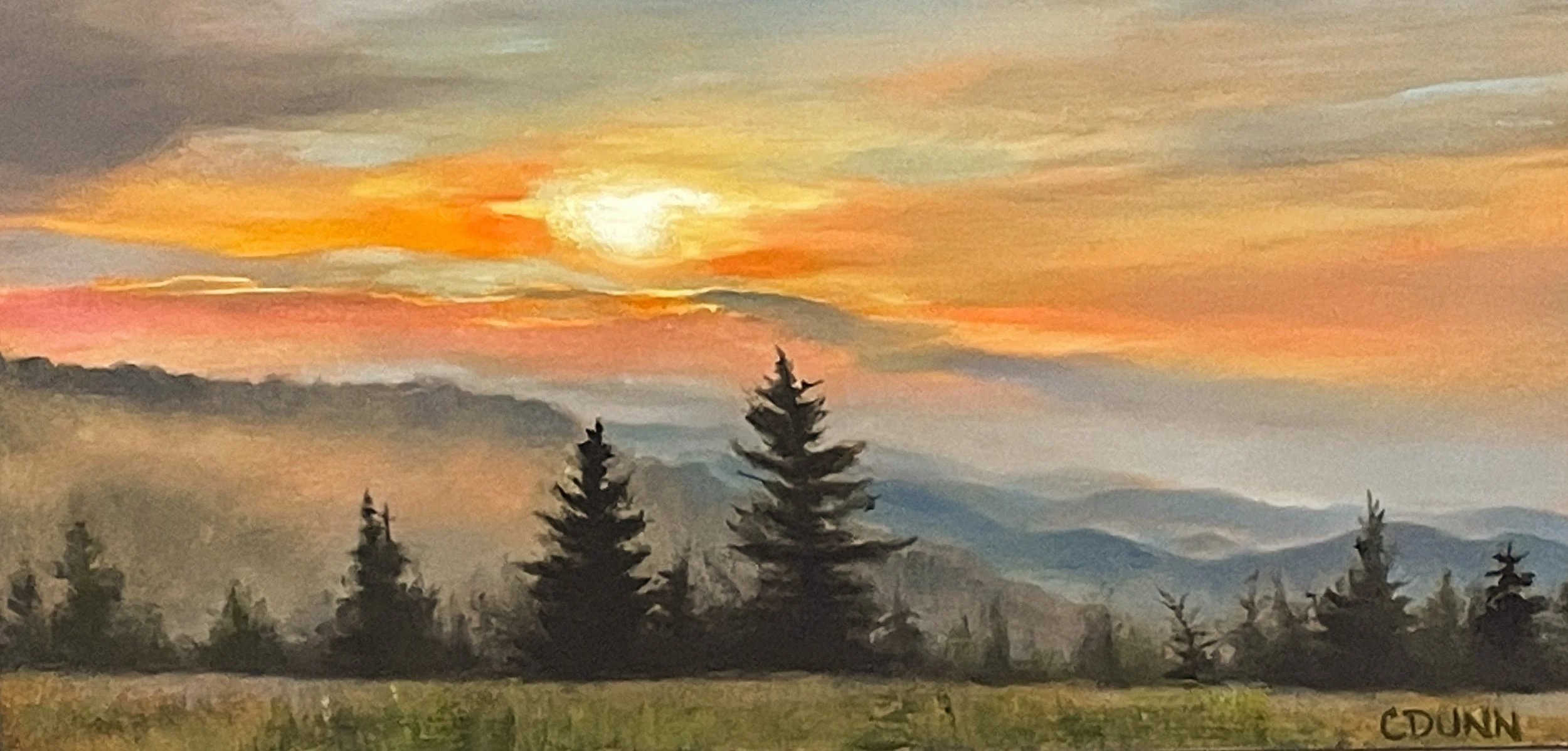
The Serpentine Chain is a new collaborative project by New York Times bestselling author Sharyn McCrumb and East Tennessee artist Cristy Dunn, exploring the deep geological and cultural ties between these distant but kindred landscapes. Long before continents drifted apart, Appalachia and the mountains of Celtic Britain were joined as one range. Today, echoes of that shared origin remain in the stone, in the music, and in the enduring spirit of mountain communities.
McCrumb, renowned for her Appalachian “Ballad” novels, brings lyrical insight to the project through essays reflecting on ancestry, migration, and the way landscape shapes identity. Dunn’s paintings visually illuminate these connections, capturing a shared reverence for the land—its beauty, resilience, and the generations formed by its ridgelines.
The collaboration will culminate in a richly illustrated coffee table book pairing McCrumb’s writing with Dunn’s artwork. Readers are encouraged to watch for more details later this summer as the release of The Serpentine Chain approaches—a celebration of mountains, memory, and the stories that bind us across time and sea.
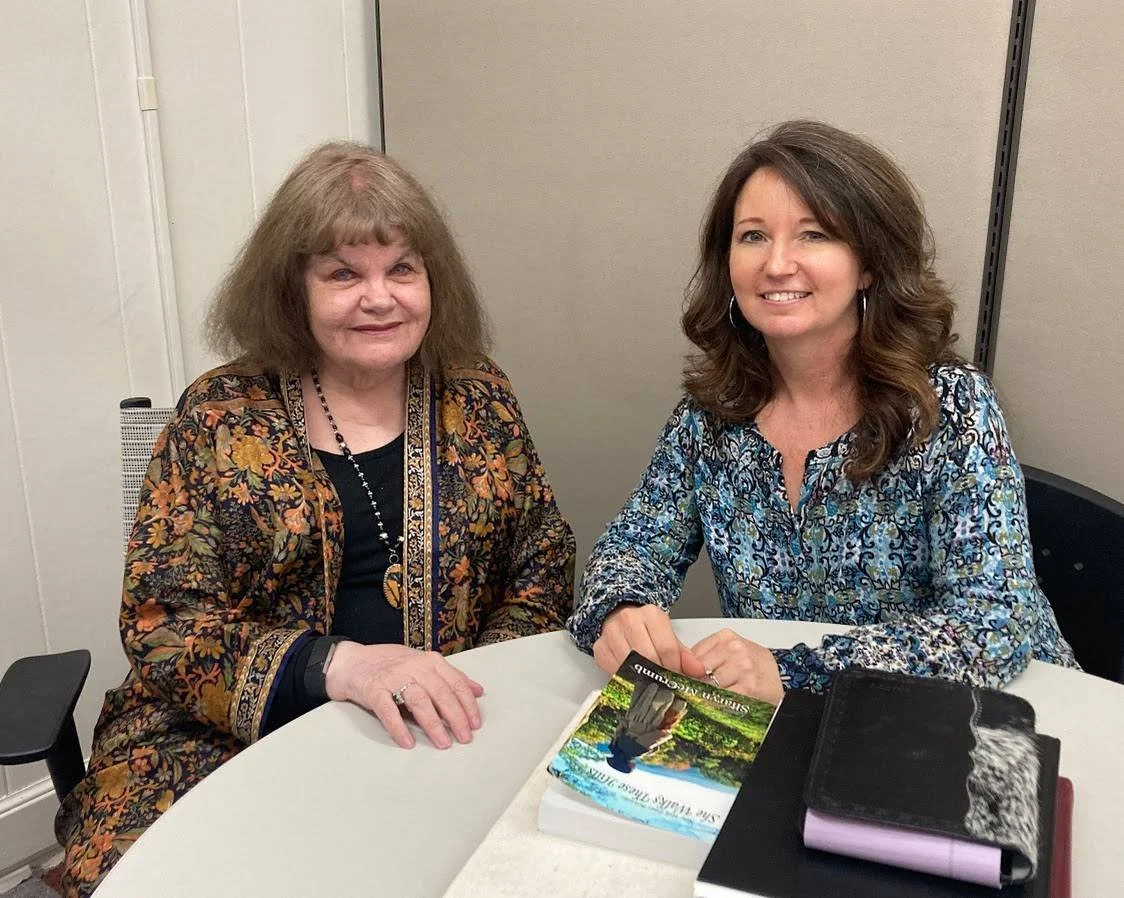
Sharyn and Cristy in a planning session
Excerpts:
Meeting the Boat
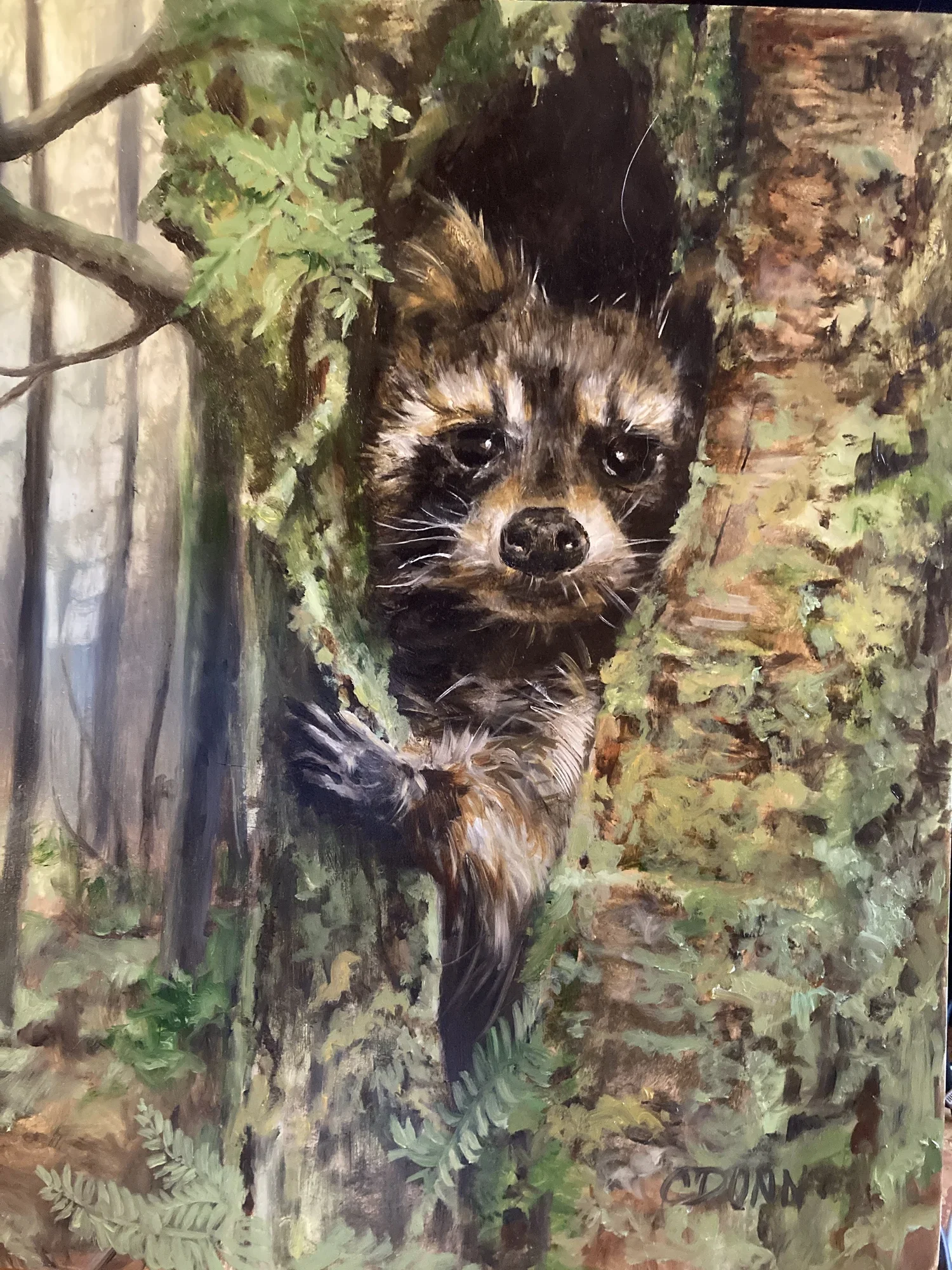
In fairness to my neighbor Bill, and my other neighbors, the honeybees, I should note that the rest of us human beings have not been in North America more than a few thousand years, which in geologic time is less than a heartbeat. Our species is not native to this continent. We all came from somewhere else. Whether your ancestors arrived by ship, like mine did, or walked across a land bridge from Siberia, all humans here are newcomers. If you want to give the land back to its rightful owners, hand your house keys over to a raccoon and hop on a plane, because raccoons did originate here, and they probably watched from under a bush as the ships anchored in the harbor off Jamestown.
Newcomers
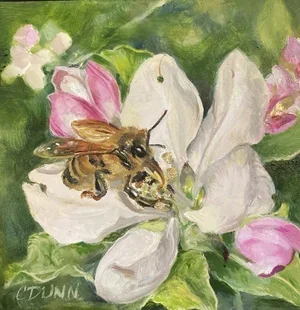
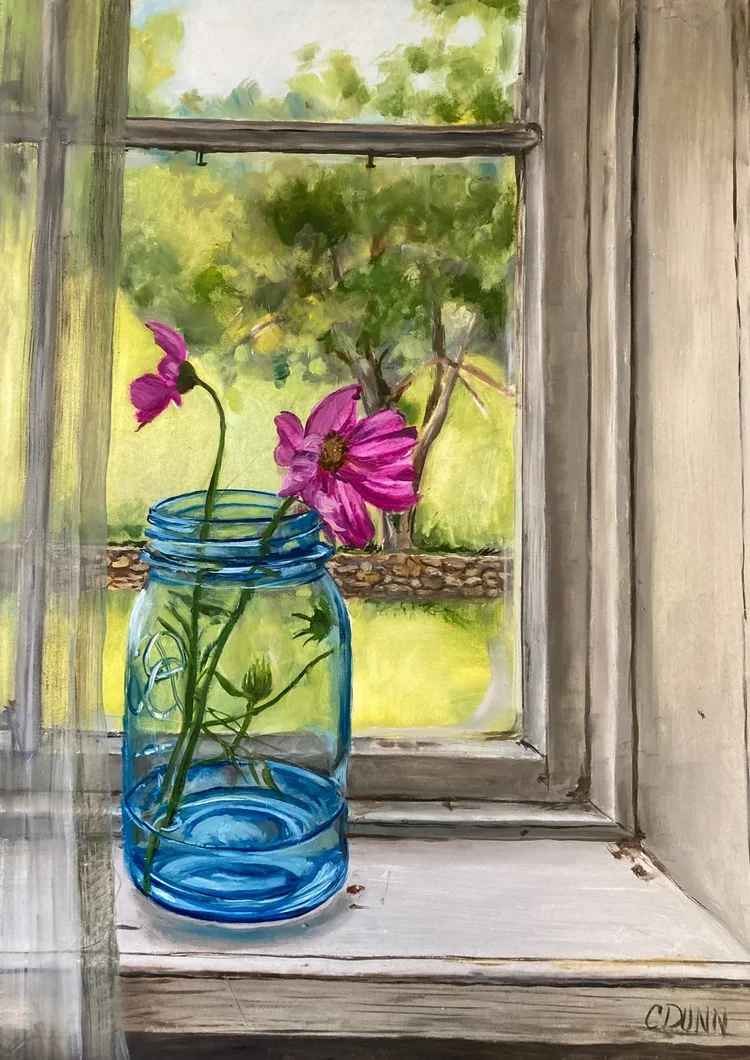
…From the window of my study I look out on a sunny back garden, bounded by a steep wooded hill on the north, and the spine of a long ridge of mountains to the south. An apple tree, now in flower, grows alongside the limestone wall in one corner of the garden, and honeybees hover among its blossoms. The place seems as anchored in eternity as the sky above it, but that's only because the things here have endured longer than living memory.
You don't have to go back very far to find newcomers that are now mistaken for original inhabitants. That old apple tree in the garden is one of them. Apples are not native to North America. They came here the same way my ancestors did-- on the deck of an English sailing ship. A couple of hundred years later, you hear people say, "As American as apple pie," because the origin of apples has mostly been forgotten. The honeybees buzzing around the apple blossoms are also strangers in a strange land. They, too, came over from Europe with the colonists, because they were more useful than the native pollinators, the wasps and yellow jackets, whose products were inferior to the abundant honey available from apis mellifera.